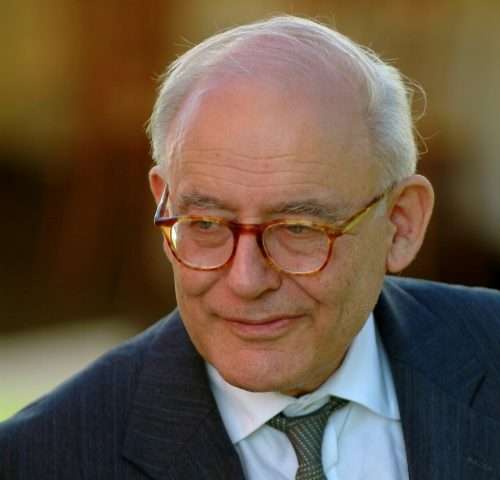
Bob Ratcliffe (CR 1988-2015), who joined the College as cricket professional and sports hall manager, died on 28th August 2023 at the age of 71, after a lengthy illness.
Sue and the family have asked me to talk about Bob’s cricketing achievements and his time at the College, which I feel honoured to do. I am indebted to the Revd Malcolm Lorimer, the archivist at Lancashire CCC and also to Accrington CC and Cherry Tree CC for providing some of the detail.
Marlborough College decided to appoint a full-time cricket professional from April 1988 and, as I was Master in Charge of cricket at the time, I was asked to sift through the numerous applications and help to distil to a short list of about six. At the time this process was taking place, I happened to read an article in the Cricketer about the plethora of quality coaches that Lancashire had produced over the last few years. One sentence stood out, and although I can’t remember the precise wording, it read something like this: the jewel in the crown is Bob Ratcliffe, who has a unique ability to be on the same wavelength as those fortunate to receive his coaching. I was aware that we had recently received Bob’s application, so I went back to study this more closely.
It is all too easy to be over-influenced by an impressive CV (as many Heads have found to their cost) but Bob’s was simply outstanding and it immediately made him a certainty for the short list.
Robert Malcolm Ratcliffe was born on 29th October 1951. Bob grew up, alongside his loving parents, Jim and Mavis, and sister Pauline, in the east Lancashire mill town of Accrington. His schooldays revolved around sport and he had the distinction of representing England Schoolboys in two disciplines; football, as a goalkeeper, and cricket, as an opening batsman. He played first team Lancashire League cricket for Accrington at the age of 16, around the time he and Sue started dating, and was an integral member of their victorious Worsley Cup side in 1970, only the second occasion that Accrington had won the trophy. The Tangerines of Bloomfield Road came knocking and wanted Bob to become a professional footballer with Blackpool FC, but he decided to take up his other sporting offer and go to Old Trafford, where he joined Lancashire CCC, first playing for the 2nd XI in 1969.
The Lancashire side of the late sixties/early seventies was packed with phenomenal talent and was firmly established as one of the very strongest one-day sides in the country. With the likes of David Lloyd, Barry Wood, Harry Pilling, Clive Lloyd, Frank Hayes and Farouk Engineer occupying the top end of the order, Bob was encouraged to develop his medium pace seam bowling to become a genuine all-rounder. He made his first team debut in 1972, and played 82 first class matches, taking 205 wickets at 26.39, with best figures of 7-58 against Hampshire at Dean Park, Bournemouth in 1978 and scored over a thousand runs, which included an undefeated championship hundred against Warwickshire at Old Trafford in 1979. He also played 99 times in the various limited-over competitions of the time and played a huge part in Lancashire’s Gillette Cup victory at Lord’s against Middlesex in 1975. Bob took 3-25 in his twelve overs which included five maidens and he was unlucky not to win the Man of the Match award. He still holds two Lancashire 2nd XI records having taken 9-35 in an innings against Warwickshire at Old Trafford and match figures of 13-54 against Worcestershire at Urmston, both in 1974. He was the 512th player to represent his county since the club came into existence in 1864 and was awarded his Lancashire cap in 1976, an honour bestowed only on those who have made a significant contribution to the Red Rose.
Had injuries not taken their toll, he would have played for significantly longer than his nine seasons at Lancashire but he retired from the club in 1980, aged only 28. Winding the clock on forty years, Lancashire held a reunion of Bob’s generation and, although Bob seldom spoke about his achievements, he came back a very proud man. The likes of Ken Shuttleworth, Peter Lever and Peter Lee told him that evening that they owed a lot of their wickets to him, as batsmen were unable to score from his bowling and then lost their wicket by trying to score from the other end. Sir Geoffrey Boycott, in one of his many books, mentioned Bob as one of the bowlers he had most difficulty against.
After Lancashire, Bob played minor counties cricket with Cumberland for six seasons and also spent two happy years as a cricket professional in Perthshire, Scotland as well as coaching at a variety of schools in the North of England and Scotland. On returning to Lancashire, he played in the Ribblesdale League as the professional at Cherry Tree CC in Blackburn in 1984 and 1985 and as an amateur in 1986 and 1987, helping them win the league in his final season. At the time of his application to Marlborough, he was working at Queen Elizabeth’s Grammar School, Blackburn in the PE department and was planning to return to Accrington CC as the first team captain for the 1988 season. Their loss was Marlborough’s gain.
Before his interview at the College, I spoke to John Rice, the ex-Hampshire player and then professional at Eton about Ratters. A glowing testimonial followed with his final comment being, “he likes a drink, you two will get on well”. And so it has proved.
He arrived in Wiltshire in April 1988, became a well-known figure in the town within weeks, and served the College, which he loved and was immensely proud of, with distinction as cricket professional, sports hall manager, hockey coach, particularly the 3rd XI girls’ team, and tutor in B1 and Turner before his formal retirement in 2011 and final retirement in 2015. He was a wonderful coach, as many here today would testify; a quiet word and suggestion, and a genuine connection with all he came into contact with. He liked people and they liked him. I estimate that he came into contact with around 4,500 pupils and was the coach to about a thousand during his time at the College; I am sure they would agree that they were fortunate to receive his sporting wisdom. The article in The Cricketer was absolutely spot on. One apocryphal story is that a pupil asked him how to make the ball swing. Ratters replied that if he held the ball this way, it would always swing towards the sun. The inquisitive pupil asked what happened if he held the ball with the shine on the other side. Bob thought for a second and replied that it would swing towards the Wellington.
But it wouldn’t be right to talk solely about his contribution to sport and cricket in particular, for there was far more to this man than that. As well as being a loving husband to Sue, proud father to Lee and Helen and doting grandfather to Abbey, Poppy, Claudia and Harper, Bob was a true and loyal friend to many. He had a heart of gold, a real generosity of spirit and would go out of his way to help anyone he could. It would be wrong to say he would give the tracksuit off his back …but he would give almost anything else. His reputation for socialising preceded him and many have suffered the after-effects of being ‘cottaged’, the word introduced into the Marlborough vocabulary to describe a late night visit to Bridewell Cottage, Bob and Sue’s home for twenty-three years. It was almost a badge of honour to have been invited, and survived, the wonderful hospitality at the cottage. Without mentioning names, I can recall one member of Common Room falling into an occupied tent in the garden at about 2am, when Helen was practising for her Duke of Edinburgh award, another putting a leg of lamb from the freezer into the bread bin, thinking it was the microwave and a poor tennis coach at Summer School, where Ratters was a wonderful barman and colleague for several years, failing to make his first day of the coaching course. Bob was, of course, fresh and raring to go. I asked him what had happened, his response: “we had a bit of cheese and a glass of red”.
But, even when verbs were at a premium and there was a lot of finger pointing rather than talking, he never lost his sporting talent. At one of the end of season cricket festivals at Haileybury in the mid-nineties, Bob was challenged to bowl at one stump at around one o’clock in the morning. Mark Seymour, Haileybury’s master i/c said he would give him fifty pounds if he hit the stump. Twenty years on from his Gillette Cup victory at Lord’s, Bob ran in, delivered and knocked the stump out of the ground. The money was donated to the Prospect Hospice.
Everyone here today will have their own story about Ratters and, undoubtedly, each one will bring a smile remembering this wonderful character. My favourite memories of Bob will be our family holidays together in Portugal, our time with the XI, playing together in a number of cricket matches, the tour to South Africa in 2006, wonderful supper parties, with table-walking and late night music, sitting and talking sport over a couple of beers and, of course, his almost inimitable sartorial elegance with the ubiquitous track suit.
We have lost a great man, whose light will remain with us, and a dear friend who lived and loved life to the full. Our hearts go out to Sue, Lee and Helen; they meant the world to him. Bob’s innings and final over on this earth may have concluded but I am pretty certain that he will be checking out the hospitality arrangements in heaven and making sure that he has the bar stools in place and a table reserved for when his friends go to join him.
Bob, thank you for your contribution in enhancing the lives of so many, for being such a character and such a very good friend; I and so many others have been privileged to know you and we will all miss you enormously. May you rest in peace and rise in glory.
Bob Pick (CR 1980-2012)